A damaged roof can last anywhere from a few weeks to several years – it really depends on how bad the damage is and what type of roof you have. But here’s the truth: every day you wait, the damage usually gets worse. This guide will help you understand how long your roof might hold up, when it’s safe to wait, and when you need to act fast.
How Long Does a Roof Last in Australia?
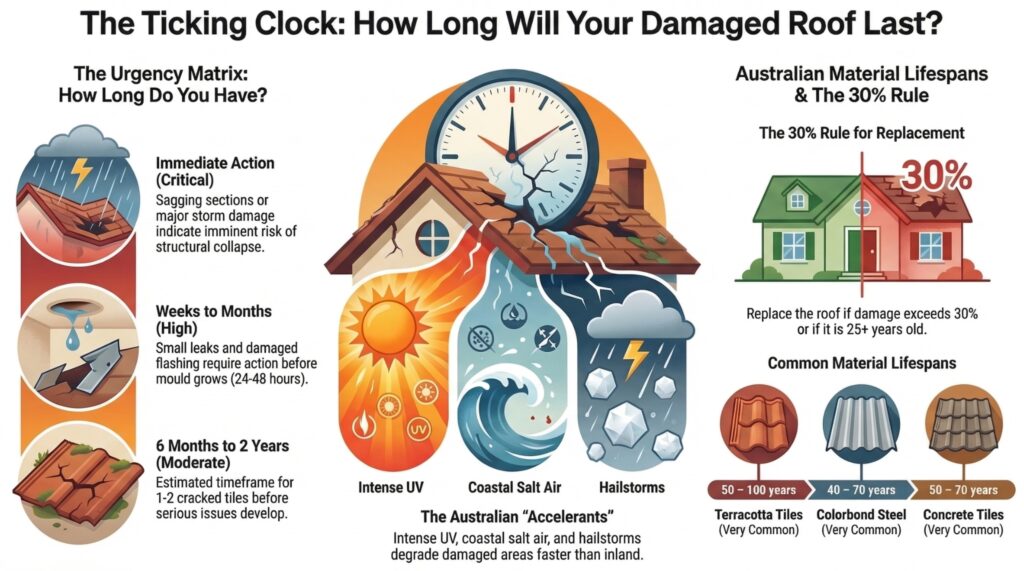
Before we talk about damaged roofs, let’s understand how long a healthy roof should last. In Australia, roof life expectancy varies quite a bit depending on the material used. The harsh Australian climate – intense UV rays, hailstorms, coastal salt air, and bushfire risk – can wear a roof down faster than in cooler countries.
Here’s a quick look at the average lifespan of the most common roof types in Australia:
| Roof Material | Average Lifespan | Common in Australia? | Notes |
|---|---|---|---|
| Colorbond Steel | 40 – 70 years | Very common | Tough against heat and rain, can rust if scratched |
| Concrete Tiles | 50 – 70 years | Very common | Prone to cracking under heavy impact (hail, branches) |
| Terracotta Tiles | 50 – 100 years | Common | Very durable, but heavy – check structural support |
| Asphalt Shingles | 10 – 25 years | Less common | Struggle in extreme Australian heat and UV |
| Zincalume Steel | 40 – 60 years | Common | Good corrosion resistance in most climates |
| Timber Shingles | 15 – 30 years | Less common | Not ideal for bushfire-prone or wet regions |
A well-maintained roof will easily reach its maximum lifespan. But once a roof is damaged – whether from a storm, old age, or neglect – that clock starts ticking much faster.
How Long Can a Damaged Roof Actually Last?
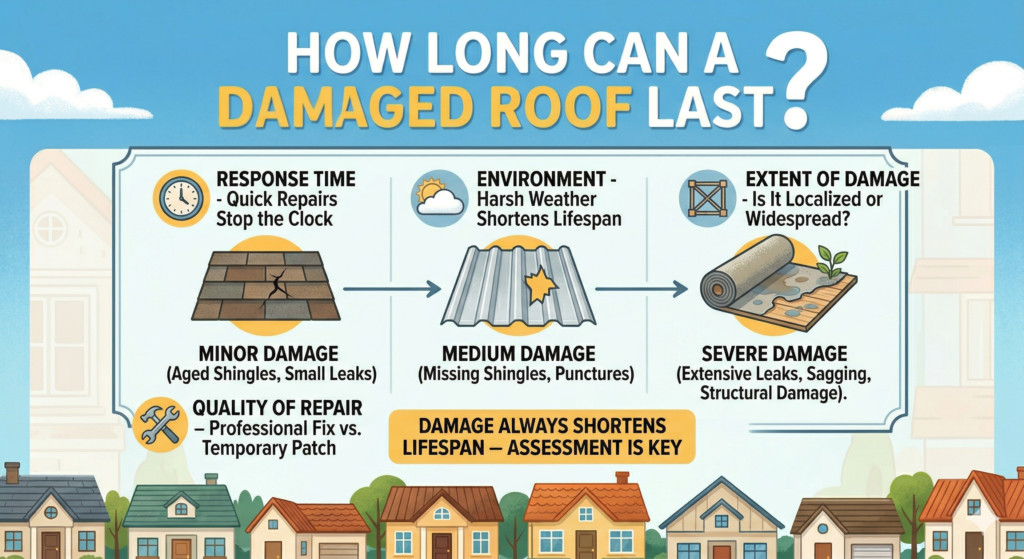
This is the question most homeowners really want answered. The honest answer is: it depends on the type and severity of the damage.
Think of it like a crack in your car windscreen. A tiny chip on the edge might stay the same size for months. But a crack in the middle? It spreads quickly – especially with temperature changes and vibration.
Roof damage works the same way. Here’s a rough guide:
| Type of Damage | How Long It Can Last Untreated | Urgency |
|---|---|---|
| 1–2 cracked or missing tiles | 6 months – 2 years | Moderate – fix within a few weeks |
| Small leak (no interior damage yet) | Weeks to months | High – mould can grow in 24–48 hours |
| Damaged flashing around chimney or vents | 3 – 12 months | High – water entry point |
| Widespread cracked tiles (10%+) | 1 – 3 years max | High – plan for replacement |
| Rusted or corroded metal roof | 6 months – 3 years | High – rust spreads fast in humid areas |
| Sagging roof sections | Weeks to months | Urgent – structural failure risk |
| Storm-damaged roof (major) | Days to weeks | Immediate – call a roofer now |
⚠ Important Warning: A sagging roof is never safe to ignore. It means the structural support underneath is compromised. This can lead to partial or full roof collapse, which puts lives at risk. If your roof is sagging anywhere – even slightly – call a licensed roofer immediately.
What Happens If You Leave a Damaged Roof Too Long?
Many homeowners put off roof repairs because they seem expensive or inconvenient. But delaying a repair almost always makes things worse – and more costly. Here’s what can go wrong:
1. Water Damage Inside Your Home
Even a small leak can let water into your ceiling, walls, and insulation. Over time, this weakens the structure of your home, ruins plasterwork, and damages electrical wiring. What started as a $300 tile repair can quickly become a $5,000+ water damage restoration job.
2. Mould and Mildew Growth
Moisture from a leaking roof creates the perfect environment for mould. Mould can start growing within 24 to 48 hours of water entering your home. Some mould types are harmful to health – especially for children, the elderly, and people with asthma or allergies.
3. Higher Energy Bills
A damaged roof often means your insulation gets wet and stops working properly. When your insulation fails, your home is harder to heat in winter and cool in summer – and your energy bills rise as a result.
4. Roof Collapse Risk
If roof damage is left untreated for long enough, the timber frame under your roof (called the roof decking or battens) can begin to rot. Once the frame weakens, the roof becomes unstable. This is rare but it is a real risk with neglected roofs.
5. Insurance Claims May Be Rejected
Most Australian home insurance policies require you to take “reasonable steps” to maintain your property. If an insurer finds that damage was caused by neglect rather than a sudden event like a storm, your claim may be denied. Keeping your roof in good shape protects your coverage too.
Signs Your Damaged Roof Can’t Wait Any Longer
Not sure if your roof needs attention right now? Watch out for these warning signs. If you notice any of these, it’s time to call a licensed roofer – don’t wait for your next routine inspection.
- Water stains or damp patches on your ceiling or walls
- Visible daylight coming through the roof in your attic or ceiling space
- Your roof is sagging or dipping in any area
- Large sections of tiles are cracked, broken, or missing
- Visible rust spreading across a metal roof
- Gutters are filling up with granules (sign of deteriorating tiles)
- Mould, moss, or lichen growing heavily on the roof surface
- After a storm — any visible structural damage or displaced sheets
- Your roof is over 25 years old and hasn’t been inspected recently
💡 Good to Know: Moss and lichen on your roof look harmless, but they hold moisture against the surface. Over time, this moisture works its way under tiles and into the structure. If your roof is covered in moss, book a roof cleaning and inspection – it’s a low-cost way to add years to your roof’s life.
Factors That Affect How Long a Damaged Roof Lasts in Australia
Australia’s climate is tough on roofs. Where you live in Australia has a big impact on how quickly roof damage spreads. Here are the key factors:
Intense UV Radiation
Australia has some of the highest UV levels in the world. UV rays break down roofing materials over time – especially asphalt shingles and painted surfaces. This is a big reason why asphalt shingles (popular in the US) don’t last as long here. If you’re in Queensland, the Northern Territory, or Western Australia, UV damage is a major concern.
Hailstorms
Hail is one of the leading causes of sudden roof damage in Australia, particularly in Melbourne, Brisbane, and Sydney. Even small hailstones can crack concrete tiles or dent metal roofing. After any hailstorm, a roof inspection is strongly recommended – damage isn’t always visible from the ground.
Coastal Salt Air
If you live within a few kilometres of the coast, salt air accelerates corrosion on metal roofs and fixings. Colorbond and Zincalume have good coastal ratings, but existing damage (scratches, chips in paint) speeds up rust significantly. A damaged coastal roof deteriorates much faster than one inland.
Cyclones and High Winds
In northern Queensland, the Northern Territory, and parts of Western Australia, cyclone-rated roofing is a requirement. High winds can lift tiles, sheets, and entire roof sections. If your roof isn’t up to the local wind rating and sustains damage in a wind event, it should be inspected and repaired as soon as possible.
Bushfire Ember Attack
In bushfire-prone areas, burning embers can land on your roof and cause damage that isn’t immediately obvious. Tiles can crack from heat, and combustible roof materials can be compromised. After a nearby bushfire event, always have your roof checked even if it looks fine from outside.
Repair or Replace? How to Decide
One of the most common questions homeowners ask is: “Should I repair my damaged roof, or is it time to replace it altogether?” Here’s a simple way to think about it:
Choose Repair If:
- Your roof is less than 15–20 years old
- The damage is isolated to one section or a small area
- The underlying structure (timber battens, decking) is still in good condition
- The repair cost is less than 30% of the full replacement cost
- You haven’t had repeated leaks or repairs in the past few years
Choose Replacement If:
- Your roof is 25+ years old and showing widespread wear
- More than 30% of the surface area is cracked, missing, or damaged
- You’re dealing with repeated leaks even after repairs
- The underlying timber structure shows signs of rot or significant damage
- The cost of repairs keeps adding up and is approaching replacement cost
- You’re planning to sell your home – a new roof adds real resale value
✅ Pro Tip: When getting quotes for roof repair, always ask your roofer to also assess the condition of the underlying structure. Many homeowners pay for repairs, only to find the battens or decking underneath also need replacing – which changes the cost equation entirely.
How to Extend the Life of Your Roof
Whether your roof is damaged or just ageing, a little maintenance goes a long way. Here are practical steps you can take to get more life out of your roof:
- Annual roof inspections: Book a professional inspection at least once a year. In storm-prone areas, inspect after every major weather event.
- Clean your gutters regularly: Blocked gutters cause water to back up under roof tiles or sheets, causing damage from below.
- Remove moss and lichen early: Use a professional roof cleaning service before moss establishes itself deeply into the tile surface.
- Trim overhanging trees: Branches rubbing against your roof cause accelerated wear and tile breakage. They also deposit leaves and debris that hold moisture.
- Fix small problems immediately: A single cracked tile costs very little to replace. Left alone, it becomes a leak, then water damage, then a much bigger bill.
- Ensure good roof ventilation: Poor ventilation causes heat and moisture to build up in your ceiling space, which accelerates the deterioration of timber framing and insulation.
- Check flashing around chimneys and skylights: Flashing is a common failure point. It should be inspected and resealed every few years.
Frequently Asked Questions
Final Thoughts
So, how long can a damaged roof last? The honest answer is: not as long as you’d hope, and usually not as long as you think. Minor damage might give you a year or two of grace – but active leaks, structural issues, or major damage need immediate professional attention.
The good news is that Australian roofs – especially Colorbond and terracotta tile – are built to last for decades. With regular inspections, prompt repairs, and a little maintenance, your roof can easily reach its full lifespan and protect your home for generations.
Don’t wait for a leak to remind you that your roof exists. A small investment in maintenance today will save you a very large bill tomorrow.