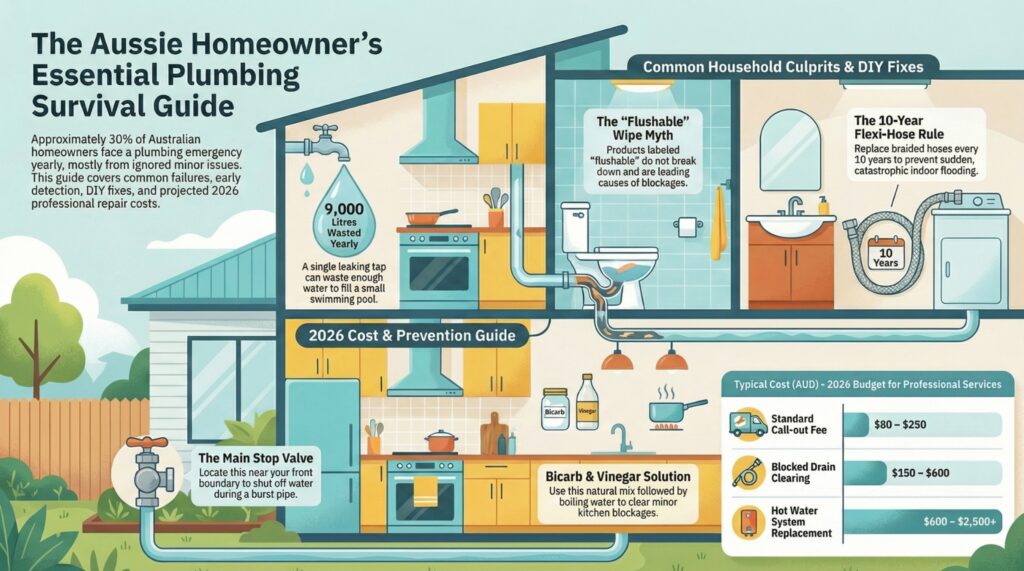
Plumbing problems are one of the most expensive and stressful challenges an Australian homeowner will face. What starts as a dripping tap or a slow-draining sink can – if ignored – become a burst pipe, a flooded bathroom, or a damaged foundation. Research shows that around 30% of Australian homeowners experience at least one plumbing emergency each year, and the majority of those emergencies began as small, ignored warning signs weeks or months earlier.
The good news is that plumbing problems follow patterns. They warn you before they become disasters. Understanding what the warning signs mean, knowing which problems you can safely fix yourself, and knowing exactly when you need to call a licensed plumber – that knowledge alone can save you thousands of dollars.
This guide covers the seven most common plumbing problems in Australian homes, what causes each one, practical DIY steps, and when professional help is essential. We also cover realistic 2026 costs so you can budget confidently before picking up the phone.
Planning a larger home renovation? Whether you’re upgrading your bathroom or kitchen, plumbing is always a significant cost component. Read our full renovation guides before you start planning.
1. Blocked Drains – Australia’s Single Most Common Plumbing Complaint
If there is one plumbing problem that almost every Australian household has dealt with at some point, it is a blocked drain. Whether it is a kitchen sink that fills up instead of draining, a bathroom shower that pools around your feet, or a toilet that refuses to flush cleanly – drain blockages are consistently the top reason Australians call a plumber.
What causes a blocked drain?
The cause depends entirely on where the blockage has formed. According to Wikipedia’s overview of drain plumbing systems, all household wastewater travels through a network of drain, waste, and vent pipes that connect to the municipal sewer. A blockage at any point in this network restricts flow upstream.
In practical terms, the most common causes in Australian homes are:
- Kitchen sinks – Cooking grease, food scraps, and oil solidify inside pipes over time. This is the leading cause of kitchen drain blockages.
- Bathroom drains – Hair and soap scum combine to form dense, sticky plugs inside shower and basin drains.
- Toilets – Wet wipes, hygiene products, and excessive toilet paper are the primary causes of toilet blockages. Importantly, products labelled “flushable” do not break down in Australian sewage systems and should never be flushed.
- Outdoor and sewer lines – Tree roots are a major cause in older Australian properties, particularly homes with terracotta or clay pipes laid before the 1980s. Roots are attracted to the moisture and warmth inside underground pipes and can crack and infiltrate even hairline gaps.
DIY steps to try:
- For minor kitchen blockages, pour half a cup of bicarbonate of soda followed by half a cup of white vinegar down the drain. Wait 30 minutes, then flush with a full kettle of boiling water.
- For bathroom shower and basin drains, a simple drain snake – available at Bunnings for under $20 – can physically pull out a hair clog in minutes.
- For toilets, use a flange plunger (the one with a rubber extension that fits into the toilet opening) and apply firm, steady pressure. Flat-bottomed plungers designed for sinks do not create an effective seal in a toilet bowl.
When to call a licensed plumber:
If the blockage returns repeatedly, if more than one drain in the house is slow at the same time, or if you hear a gurgling sound from other fixtures when you flush the toilet – these are all signs of a blockage in the main sewer line, not just an individual drain. A licensed plumber with hydro-jetting equipment or a CCTV drain camera is required to diagnose and clear this properly without damaging your pipes.
Blocked drains often lead to bathroom damage. If you’ve experienced persistent drain issues, it may be time to consider a bathroom renovation to update ageing fixtures and pipework at the same time.
2. Leaking Taps – Small Drip, Big Waste, Big Bill
That steady drip-drip-drip from a tap that will not fully close seems harmless. It is not. A single leaking tap can waste over 9,000 litres of water per year – enough to fill a small swimming pool – and that waste shows up directly on your water bill every quarter.
What causes a leaking tap?
The internal mechanics of a tap rely on rubber components to create a watertight seal. Over years of use, these components wear down. In traditional style taps, a rubber washer sits at the base of the valve and gets compressed every time you turn the tap off. Eventually this washer degrades and can no longer fully seal. In modern mixer taps and ceramic disc taps, the internal cartridge wears out and loses its seal instead.
DIY steps to try:
Replacing a washer is a manageable DIY job for most homeowners with basic tools:
- Turn off the water at the isolation valve under the sink, or at the main meter outside.
- Open the tap fully to release remaining water pressure in the pipe.
- Remove the tap handle – usually held by a screw hidden under a decorative cap.
- Unscrew the tap bonnet and remove the headgear to access the washer.
- Replace the worn rubber washer or O-ring at the base of the valve. Both parts cost less than $5 at any hardware store.
- Reassemble and slowly restore the water supply.
When to call a licensed plumber:
If the tap continues dripping after washer replacement, the valve seat inside the tap body is likely damaged. Valve seats can be re-cut or the tap may need replacement — both require professional tools and a licensed tradesperson.
3. Running Toilet – Silently Wasting Hundreds of Litres a Day
A toilet that keeps refilling after flushing, or one you need to jiggle the handle to make stop, is one of the costliest plumbing problems Australian homeowners tend to ignore the longest. Unlike a dripping tap that you can see and hear, a running toilet may not be obvious – but it can waste hundreds of litres of water every single day.
What causes a running toilet?
The most common cause is a worn or misaligned fill valve – the rubber seal at the base of the cistern that prevents water from flowing continuously into the bowl once the cistern is full. When this seal degrades, water trickles constantly from the cistern into the bowl, and the cistern refills over and over again. A float arm that is bent or sitting too high in the cistern can cause the same problem by failing to stop the water inlet at the correct level.
DIY steps to try:
- Lift the lid from the toilet cistern and observe what is happening when the toilet runs.
- A complete replacement fill valve kit is available at hardware stores for $15–$30 and comes with step-by-step instructions.
- Check whether the flapper valve – the rubber seal that covers the outlet at the base of the cistern – is seated correctly. If it appears warped, has residue on the seal surface, or has a visible gap, replace it. Flapper valves cost around $5–$10.
When to call a licensed plumber:
If you are not confident identifying which component has failed, or if the toilet continues running after a DIY repair, call a plumber. The ongoing water waste from a running toilet will cost you significantly more in water bills than a single service call.
4. No Hot Water – Urgent, Especially in Winter
Few household problems create as much immediate disruption as waking up to no hot water. It is one of the most urgently searched plumbing topics across Australia every winter, and the right diagnosis depends entirely on what type of system you have.
What causes no hot water?
The answer differs by system type:
- Electric hot water systems – A tripped circuit breaker, a blown fuse, or a failed heating element are the most common causes. According to Energy.gov.au, electric storage systems account for the majority of hot water systems in Australian homes and have a typical service life of 8–12 years.
- Gas hot water systems – A pilot light that has gone out, an interrupted gas supply, or a failed thermocouple are typical causes. If your pilot light keeps going out, the thermocouple – which detects whether the flame is lit and keeps the gas valve open – is likely failing and needs replacement.
- Solar hot water systems – A faulty booster element or a failed circulation pump can reduce or eliminate hot water, particularly on overcast or winter days when the solar collector cannot generate sufficient heat.
- Ageing systems – Hot water systems over 10 years old are increasingly prone to failure. If your system is leaking water from the base, this usually indicates the tank itself has failed and the system needs replacement rather than repair.
DIY steps to try:
For electric systems, check your switchboard first. If a circuit breaker has tripped, reset it and allow at least an hour for the water to reheat. For gas systems, check whether the pilot light is lit – your unit’s instruction label will have step-by-step relighting instructions – and confirm the gas isolation valve near the unit is fully open.
When to call a licensed plumber:
Always call a licensed plumber or gasfitter if the system is leaking, if you smell gas anywhere near the unit, or if a basic reset does not restore hot water. Under Australian law, gas appliance repairs must be carried out by a licensed gasfitter. Attempting DIY repairs on gas systems is illegal and extremely dangerous.
5. Low Water Pressure – When Your Shower Feels Like a Drizzle
If your shower feels like a gentle mist rather than an actual shower, or your taps produce a trickle rather than a proper flow, you are dealing with a water pressure problem. Low water pressure is frustrating daily, and it often points to an underlying issue that will not resolve itself.
What causes low water pressure?
The cause can be localised – affecting only one fixture – or house-wide, affecting every tap and shower simultaneously.
- Single fixture low pressure – Limescale and mineral deposit build-up inside showerheads and tap aerators is the most common cause. This is particularly prevalent in areas of Australia with hard water, including Adelaide, Perth, and regional Queensland. Hard water, which contains high concentrations of dissolved calcium and magnesium, leaves deposits inside fittings over time and progressively restricts flow.
- House-wide low pressure – A partially closed main stop valve, a hidden pipe leak diverting flow away from your fixtures, or ageing galvanised steel pipes where internal corrosion has narrowed the bore of the pipe are common causes.
- Water hammer – A related but distinct phenomenon, water hammer produces a loud banging sound in the pipes when taps are turned off quickly and is caused by a sudden change in water pressure. It is more common in copper pipe systems and can accelerate pipe wear over time if not addressed.
DIY steps to try:
For a single showerhead or tap aerator, remove the fitting and soak it overnight in undiluted white vinegar. This dissolves mineral deposits effectively and can fully restore flow. Ensure your main stop valve – usually located near the water meter at the front boundary of the property – is fully open.
When to call a licensed plumber:
If the low pressure is house-wide, appeared suddenly, or you suspect a hidden leak, call a plumber. They can use pressure testing equipment to isolate the cause and install a pressure limiting valve (PLV) on your main water supply line if street pressure is too high – a common issue in some Australian suburbs where mains pressure fluctuates.
6. Burst and Leaking Pipes – Act Within Minutes
A burst pipe is a genuine plumbing emergency. Water can cause structural damage to walls, floors, ceilings, and foundations within hours. The faster you act, the less damage your property sustains – and the lower your repair bill will be.
What causes burst and leaking pipes in Australian homes?
There are several causes specific to the Australian context:
- Ageing pipes – Many Australian homes built before the 1980s still have galvanised steel pipes that have corroded and narrowed internally over decades. These pipes are prone to leaking and eventual failure.
- Extreme heat – Australia’s summer heatwaves cause pipes – particularly plastic and older copper pipes exposed to direct sunlight – to expand and develop cracks or joints to fail.
- Tree root intrusion – As discussed in the blocked drains section, root intrusion does not only block pipes. In older clay or terracotta systems, roots can crack and split the pipe entirely.
- Burst flexi hoses – This is a uniquely common emergency in Australian homes. Flexible braided hoses connect taps and toilets to the water supply behind cupboards and wall cavities. These hoses typically have a service life of 10–15 years. When they fail – which happens suddenly and without warning – they can flood an entire room in minutes. Inspect every flexi hose in your home regularly, and replace any that show fraying, kinking, or rust spots immediately, even if they are not yet leaking.
According to the Insurance Council of Australia, escape of liquid – primarily from burst pipes and flexi hose failures – is consistently one of the top three home insurance claim categories in Australia each year.
What to do immediately when a pipe bursts:
- Turn off the water at the main stop valve – located near the water meter at the front of the property.
- Open all taps in the house to drain remaining water from the pipes and relieve pressure.
- Take photographs of the damage immediately for insurance purposes.
- Call a licensed plumber.
When to call a licensed plumber:
Always. Burst pipe repairs require a licensed plumber. Temporary patches using plumber’s tape or hardware store repair clamps can slow a minor leak in an emergency, but they are not permanent solutions and will fail under pressure.
Roof leaks can mimic burst pipe damage. If you are unsure whether water entering your home is from a plumbing failure or a roof issue, read our guide on how much roof repair costs in Australia before calling anyone – it may save you an unnecessary call-out fee.
7. Blocked Toilet – Cannot Be Left Until Tomorrow
A toilet that will not flush properly, keeps blocking, or is at risk of overflowing demands immediate attention. Unlike most other plumbing problems, a blocked toilet cannot be left until a convenient time.
What causes a blocked toilet?
The single biggest cause of repeated toilet blockages in Australian homes is flushing items that cannot break down in the sewage system. Wet wipes – even those explicitly labelled “flushable” – do not disintegrate in Australian sewage systems and are a leading cause of both household blockages and broader sewer network problems nationally. Hygiene products, cotton rounds, paper towels, and children’s toys are other common culprits.
Older homes may experience toilet blockages due to the same tree root intrusion and pipe degradation issues that affect other drains.
DIY steps to try:
Use a flange plunger — the kind with a rubber extension that seats inside the toilet drain opening — and apply firm, controlled pressure. Vigorous or aggressive plunging can push the blockage further down the pipe or splash contaminated water. If plunging does not clear the blockage, a toilet auger (also called a closet snake) can reach further and either break up or retrieve the obstruction.
When to call a licensed plumber:
If plunging does not resolve the issue within a few attempts, stop trying and call a plumber. Forcing a solid obstruction deeper into the sewer line makes the eventual repair significantly more expensive. If the toilet is at risk of overflowing, locate and close the isolation valve at the base of the toilet to stop water entering the bowl while you wait.
Thinking about replacing an ageing toilet as part of a larger project? Our bathroom renovation category has cost guides and design advice for Australian homeowners planning a full bathroom upgrade.
How Much Does a Plumber Cost in Australia in 2026?
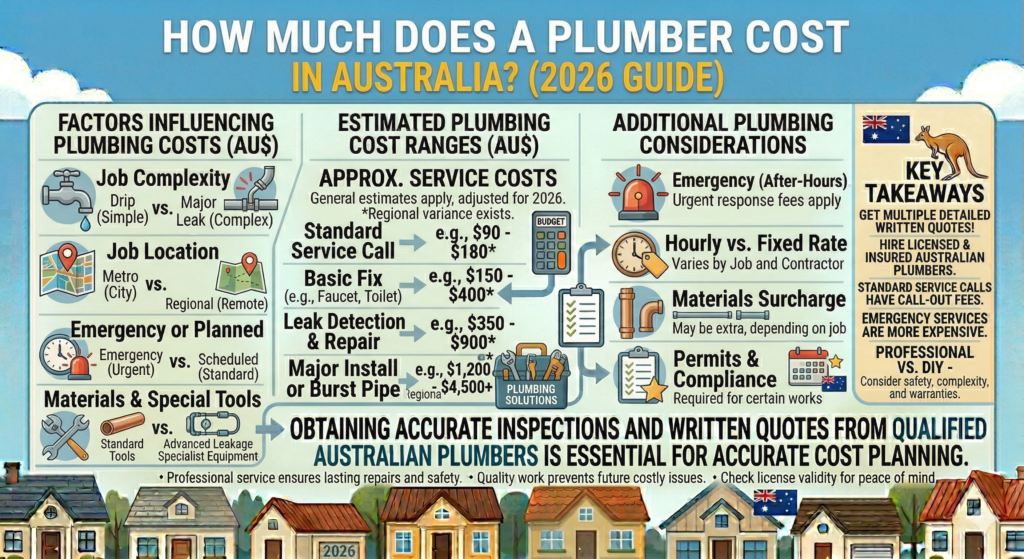
Before calling a plumber, it helps to know what you are likely to pay. Costs vary by state, time of day, and job complexity, but here are the realistic figures for 2026:
| Service | Typical Cost (AUD) |
|---|---|
| Call-out fee (standard hours) | $80 – $250 |
| Hourly rate (standard hours) | $80 – $200/hr |
| Emergency / after-hours hourly rate | $150 – $350/hr |
| Leaking tap repair | $80 – $150 |
| New tap installation | $80 – $350 |
| Running toilet repair | $80 – $200 |
| Blocked drain clearing | $150 – $600 |
| Toilet installation | $250 – $550 |
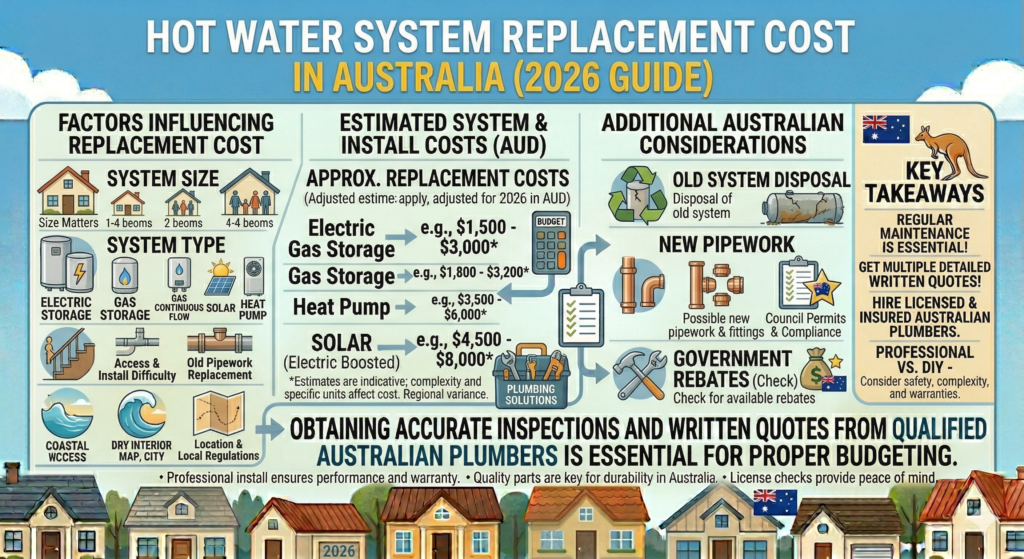
| Hot water system replacement | $600 – $2,500+ |
| Full house re-plumb | $10,000 – $20,000+ |
Always verify your plumber is licensed before any work begins. In Australia, all plumbing and drainage work must be legally performed by a licensed tradesperson. You can check plumber licence status through your state’s relevant authority:
- NSW – NSW Fair Trading
- Victoria – Victorian Building Authority (VBA)
- Queensland – Queensland Building and Construction Commission (QBCC)
- Western Australia – Building and Energy WA
- South Australia – Consumer and Business Services SA
For guidance on water-efficient fixtures and appliances — especially when replacing toilets, taps, or hot water systems – the Australian Government’s Water Efficiency Labelling and Standards (WELS) scheme provides ratings and comparisons across all major brands. Choosing higher-rated WELS fixtures can significantly reduce your household water consumption and ongoing bills.
How to Prevent Plumbing Problems Before They Start
The most cost-effective plumbing repair is the one you never need to make. These simple habits significantly reduce your exposure to plumbing emergencies:
- Install drain strainers in all shower and sink drains – they catch hair and debris before it enters the pipe
- Never pour cooking grease or oil down the kitchen sink – let it cool and solidify, then put it in the bin
- Only flush toilet paper – no wet wipes, no hygiene products, no tissues, regardless of packaging claims
- Inspect flexi hoses under every sink, behind every toilet, and at the laundry tub at least every six months – replace any showing fraying, kinking, or rust spots immediately
- Book a professional plumbing inspection every one to two years to identify early signs of pipe corrosion, root intrusion, or pressure issues
- Service your hot water system every three to five years – most manufacturers and Australian state energy authorities recommend this
- Know where your main stop valve is before an emergency happens – it is typically at the front boundary of the property near the water meter
How Plumbing Connects to the Bigger Picture of Home Maintenance
Plumbing is just one part of maintaining and improving your home. A leaking pipe inside a wall can cause timber rot that affects your home’s structural integrity. Persistent moisture from drainage problems can lift floor tiles, cause paint to peel, or contribute to mould growth behind walls and ceilings.
Looking at your home as an interconnected system – where plumbing, roofing, painting, and structural elements all affect each other – is the mindset of a smart homeowner.
If you have been dealing with water ingress or moisture problems, it is worth also reviewing the condition of your roof. Our guides on how long a roof lasts in Australia, the best time of year to replace a roof, and cheapest roofing materials for Australian homeowners can help you assess whether a roofing issue may be contributing to moisture problems in your home.
Equally, if you are planning any renovation work that involves opening up walls or ceilings – whether for a bathroom renovation or a kitchen renovation – it is the ideal opportunity to have a plumber inspect and replace any ageing pipes hidden behind the walls while the space is already open, avoiding a far more costly job later.
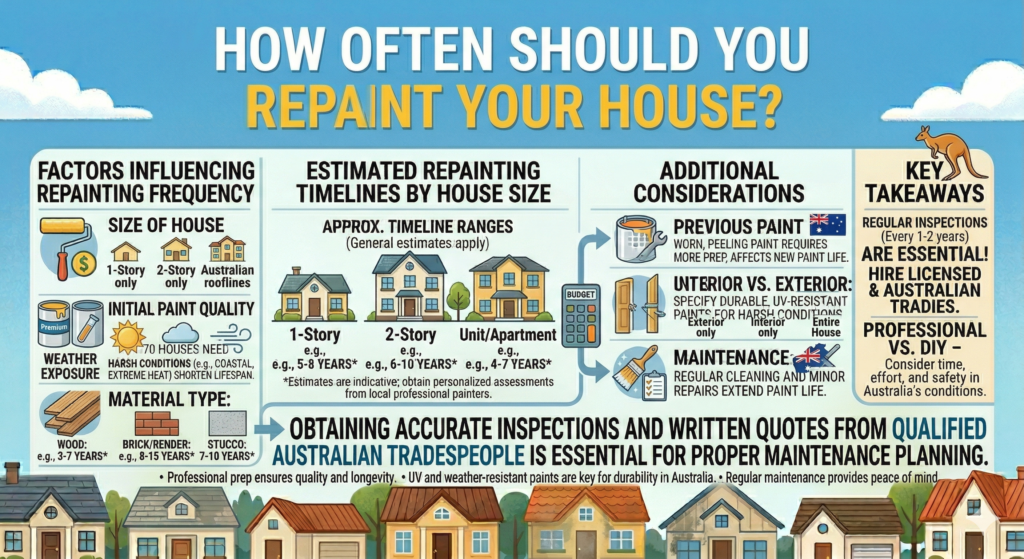
And once the structural and plumbing work is done, a fresh coat of paint is often the final step that transforms a renovation into a finished home. Our guides on how much it costs to paint a house in Australia and how often you should repaint your house will help you plan and budget that final stage with confidence.
Final Thoughts
Most plumbing problems in Australian homes start small. A dripping tap, a slow drain, a toilet that runs a few seconds too long – these are warning signs, not emergencies. Address them early, apply the right DIY fix where it is safe and straightforward to do so, and call a licensed plumber the moment a job moves beyond your comfort level or legal scope.
Your home is one of the most significant investments you will ever make. Treating its plumbing with the same care and attention you give its roof, its walls, and its interiors will protect that investment for years to come.
Have a renovation project coming up? Explore all our home improvement guides at Home Improvement Australia – from roofing and painting to bathroom and kitchen renovations – to plan every stage with confidence.