Your roof is one of the most important parts of your home, protecting the people and belongings inside from rain, wind, heat and changing weather conditions. Yet roofing problems are often easy to overlook until water starts appearing on the ceiling or a small issue develops into a much larger repair.
Melbourne homes are exposed to a wide range of weather throughout the year. Heavy rain, strong winds, summer storms, falling branches and long periods of sun can all affect roofing materials and drainage systems. Some problems are obvious, while others can remain hidden until they cause internal damage.
Understanding the most common roofing problems can help homeowners recognise the warning signs early and decide when professional attention is needed.
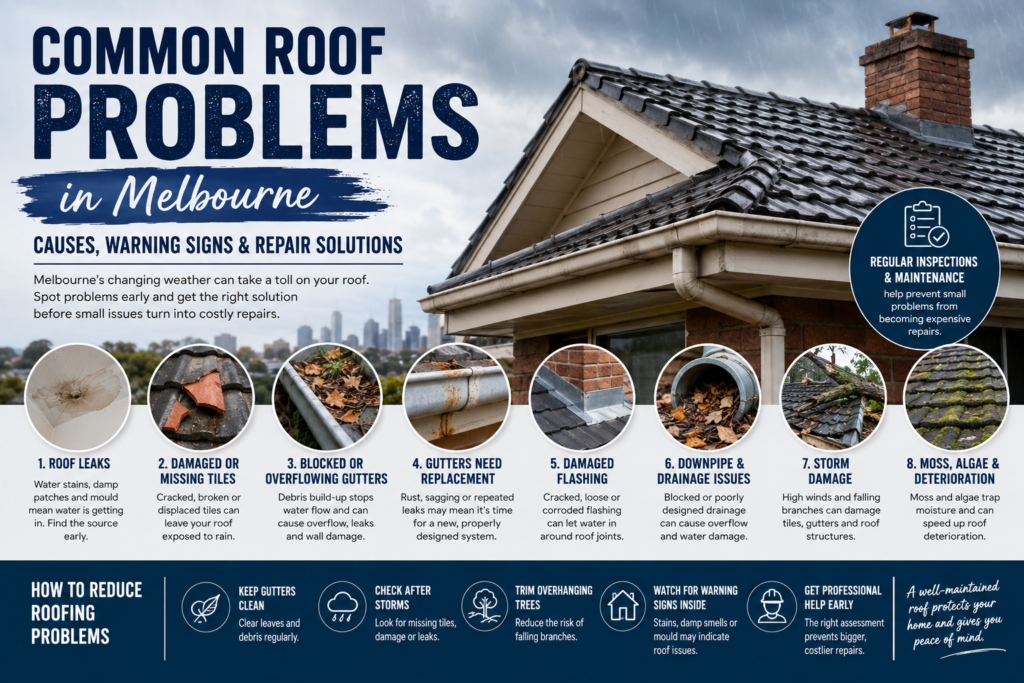
1. Roof Leaks
Roof leaks are among the most common problems homeowners encounter. A leak may begin as a small amount of water entering through a damaged section of the roof, but continued moisture can eventually affect ceilings, insulation, timber and walls.
There are several possible causes of a roof leak. Damaged or missing tiles, deteriorated seals, cracked materials, worn flashing and problems around roof penetrations can all allow water to enter.
One of the frustrating things about roof leaks is that the location of the ceiling stain does not always identify where the water is entering. Water can travel along roof structures before becoming visible inside the home.
Warning signs of a roof leak
Look out for:
• Water stains on ceilings or walls
• Damp patches that appear after rain
• Peeling paint or bubbling plaster
• Mould or a musty smell
• Dripping water during heavy rainfall
• Damaged insulation around the roof space
If these signs appear, it is better to investigate the problem early rather than wait for the damage to become more extensive. Professional leaking roof repair Melbourne services can help identify the source of the problem and determine whether a repair or more extensive work is required.
2. Damaged or Missing Roof Tiles
Tiled roofs can last for many years, but individual tiles can become cracked, broken or displaced. Storms, falling branches and general deterioration can all contribute to tile damage.
A damaged tile may not appear to be a serious problem, particularly if there is no visible leak inside the home. However, an exposed section of the roof can allow rainwater to reach areas that should remain protected.
After a significant storm, it is worth checking the roof from ground level for obvious missing or displaced tiles. Avoid climbing onto the roof yourself, particularly when surfaces are wet or damaged.
If damaged tiles are found, a professional inspection can determine whether individual tiles need replacement or whether the surrounding roof structure also requires attention.
3. Blocked or Overflowing Gutters
Gutters play an important role in directing rainwater away from the roof and walls of your home. When they become blocked with leaves, dirt and other debris, water can stop flowing correctly.
Overflowing gutters can result in water running down exterior walls or collecting around the foundations. In some cases, water can also enter areas around the fascia and roof edge.
Melbourne homes surrounded by mature trees may be particularly prone to gutter blockages, especially during periods of heavy leaf fall.
Signs your gutters may need attention
• Water overflowing during rain
• Plants or heavy debris growing inside the gutter
• Sagging sections
• Rust or visible holes
• Water stains around the fascia
• Downpipes that appear blocked
• Gutter joints that leak during rainfall
Regular cleaning can help prevent some problems, but damaged or deteriorated gutters may eventually need more extensive work.
4. When Gutters Need Replacement
Not every damaged gutter needs to be replaced. Small leaks or loose brackets may be repairable, while extensive rust, repeated leaks, sagging or poor drainage may indicate that replacement is a more practical option.
The age and material of the existing gutter system should also be considered. Older gutters may have deteriorated to the point where repeated repairs offer only a temporary solution.
If replacement is recommended, a professional can assess the roof size, drainage requirements, gutter profile and downpipe arrangement before selecting a suitable system. Homeowners considering gutter replacement Melbourne services should also make sure the new system is properly positioned and has the correct fall to direct water towards the downpipes.
A properly designed gutter system is not simply about appearance. It forms an important part of the home’s overall water management.
5. Damaged Roof Flashing
Flashing is used around areas where the roof meets other structures or where water could otherwise find a path into the building. You may find flashing around chimneys, skylights, walls, valleys and other roof junctions.
When flashing becomes damaged, corroded or poorly sealed, water can enter even when the main roof covering appears to be in good condition.
Flashing problems can be particularly difficult for homeowners to identify because the first visible sign may be an internal ceiling stain rather than an obvious problem on the roof itself.
A professional inspection can help determine whether flashing needs to be resealed, repaired or replaced.
6. Problems With Downpipes and Roof Drainage
A roof drainage system needs to work as a complete system. Gutters collect rainfall, while downpipes carry the water away from the building.
A blocked, damaged or undersized downpipe can prevent water from leaving the gutter efficiently. This can lead to overflowing gutters and water accumulating around parts of the property where it can cause damage.
In some situations, the problem may not be the gutter itself. Poorly positioned downpipes, incorrect drainage connections or inadequate capacity can also contribute to water management problems.
This is where roof plumbing Melbourne services can be relevant. Roof plumbing covers important parts of the roof drainage system, including gutters, downpipes, flashing and related water management components.
7. Storm Damage
Melbourne weather can change quickly, and severe storms can put considerable pressure on residential roofs.
Strong winds can displace tiles, damage metal roofing and affect gutters. Falling branches can also cause direct damage to roof surfaces and drainage systems.
After a major storm, look from a safe position for visible signs of damage. Check for missing tiles, damaged gutters, fallen branches and water entering the home.
If there is active water ingress, placing a container underneath a leak can help protect flooring and furniture temporarily while professional assistance is arranged. Do not climb onto a damaged or wet roof to investigate the problem yourself.
8. Moss, Algae and General Roof Deterioration
Roof surfaces can accumulate moss, algae, dirt and other organic growth over time. This is particularly noticeable on roofs that remain shaded or damp for extended periods.
While some surface growth may mainly affect appearance, excessive moisture and organic material can contribute to deterioration in certain roofing materials.
Regular inspection and appropriate cleaning can help homeowners identify problems before they become more serious. However, roofing materials require different cleaning methods, so aggressive cleaning techniques should not be used without considering the type and condition of the roof.
How to Tell When a Roof Needs Professional Attention
Some minor maintenance tasks can be handled as part of normal home upkeep, but roofing work is different from many other household repairs because it involves working at height and dealing with weatherproofing systems.
Professional assistance is worth considering when:
• Water is entering the home
• A leak keeps returning after previous repairs
• Several roof tiles are damaged or missing
• Gutters repeatedly overflow
• Gutters are badly rusted or sagging
• Flashing appears damaged or corroded
• Downpipes are blocked or not draining properly
• Storm damage has affected the roof
• You are unsure where water is entering
A professional assessment can help identify the actual source of the problem rather than simply treating the most visible symptom.
How Melbourne Homeowners Can Reduce Roofing Problems
Regular maintenance can prevent many small roofing issues from becoming expensive repairs.
Start by keeping gutters and downpipes clear, particularly before periods of heavy rainfall. After major storms, inspect the roof from the ground for obvious damage. Keep trees near the house properly maintained so that branches are less likely to fall onto the roof.
It is also worth paying attention to small warning signs inside the home. A new ceiling stain, damp smell or patch of mould may indicate a problem above the ceiling.
Addressing these signs early can often be easier and less disruptive than waiting until a significant amount of water has entered the property.
Do Not Ignore Small Roofing Problems
A roofing problem rarely becomes easier to deal with by being ignored. A cracked tile, leaking gutter joint or damaged section of flashing may initially seem minor, but continued exposure to rain can allow moisture to reach parts of the home that are not designed to remain wet.
The right solution depends on the cause of the problem. Sometimes a small repair is enough. In other cases, replacement or improvements to the drainage system may provide a more reliable long term solution.
For Melbourne homeowners, regular inspections and timely maintenance are among the simplest ways to protect a roof and reduce the risk of unexpected water damage.